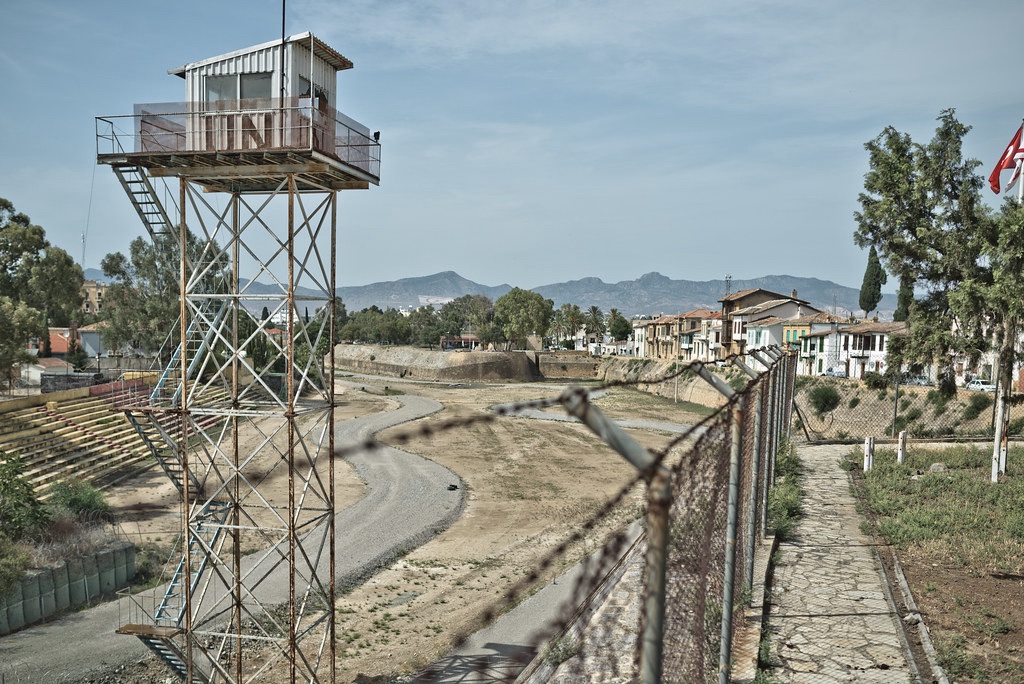
“The Green Line in Nicosia (Cyprus)” by Marco Fieber is licensed under CC BY-NC-ND 4.0
Prayer and Politics
“First of all, then, I urge that supplications, prayers, intercessions, and thanksgivings be made for all people, for kings and all who are in high positions, that we may lead a peaceful and quiet life, godly and dignified in every way. This is good, and it is pleasing in the sight of God our Savior, who desires all people to be saved and to come to the knowledge of the truth.”
1 Timothy 2:1-4 ESV
Here in the second chapter of the book of First Timothy Paul gives instruction in prayer to the early believers. His use of the word “firstly” strongly emphasises the importance of praying for the political powers of the time. He urges them to prioritise prayer for them. He does this in spite of the fact that some in power are actively persecuting the church. He even encourages the Christian’s to pray prayers of thanksgiving for these persecuting powers. Later in the passage we see that he does this because he recognises that they have the authority to bless or disrupt the life of the believers, and in turn their living of a Godly life and the transmission of the gospel. In the last verse we also see him extend an invitation for these Christians to reflect on how God is working for the salvation of all even those they are called to pray for.
As we consider how to pray for Cypriot politics let’s remember this wisdom. Weather we are praying for a political power we agree with or not. If they are in power, and using it to serve the populace we pray for them expressing gratitude that they maintain an environment of law and order in which God’s people can flourish. However, even those we see as abusing their positions we are called to pray for. Not that their abuses may continue but rather with humility recognising our own propensities towards such behavior we invite God’s spirit to work in their hearts as he has in ours. God’s people do not have the luxury of ignoring the political environment. We believe that if God is not invited to be at work influencing the human authority exercised in politics then Satans distorting and destructive influence is all that remains. We must pray for these things. Especially if we are unhappy with the status quo and believe it to be destructive. After all we are a people who believe in God’s power to destroy the work of satan and transform peoples hearts having experienced it for ourselves.
Prayer Prompt
Below you will find a brief overview of the existing governmental structures on the Island of Cyprus and then a more in depth breakdown of each. Some of these governments are internationally recognized, others not. Regardless, these governments are in place and exercise influence over every aspect of daily life on the island of Cyprus.
Start by reading the information below, if you have an emotional response to the information presented note it and pray first for yourself.
Next make a plan. Who do you feel called to pray for ? Ask God why ? Perhaps set asside a period of time to pray through the page section by section.
Praying for Individuals:
We have included the Names and links to biographies for various leaders. Not all of them are in English, but you can translate them here. Look at their picture, remember they are people like you. They have mothers, fathers, spouses, and children just like you. Then pray for them in the same way you’d want someone to pray for you.
Praying for Institutions:
We have given a brief synopsis of each of the larger political organizations present on the Island. Take some time to pray for them and the way they influence Cyprus. Ask that the lord to protect them from destructive influences and inspire in them a spirit of selfless service giving them the wisdom needed to truly bless the people they exist to serve.
Cyprus’ Political Environment
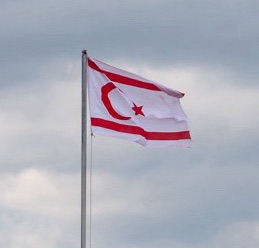
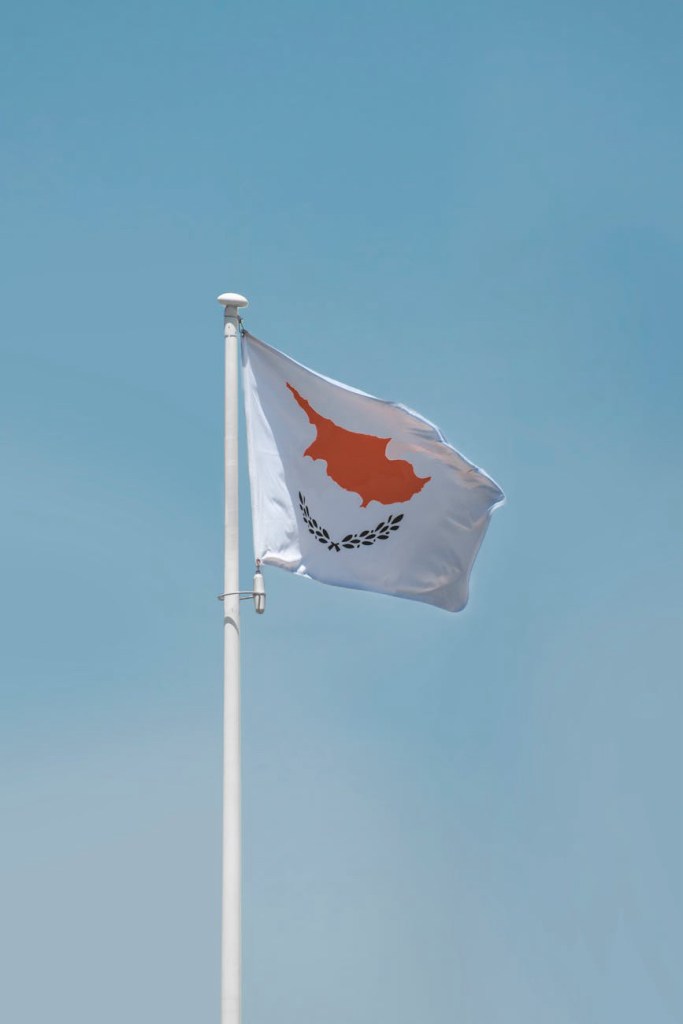
The political environment of Cyprus is like all things profoundly influenced by the yet unresolved conflict between Northern and Southern Cyprus. The reality on the ground is that there are two established systems of state governance at work on the island of Cyprus, The Republic of Cyprus and The Republic of Northern Cyprus. In addition to these two governments there are also other politically influential entities at work in Cyprus. These include the U.N. Peace Keeping forces (UNIFCYP), British Administrated Sovereign Base Areas, the European Union of which the Republic of Cyprus is a member, and Turkey and its Armed Forces. The political environment therefore is quite complex both because of the amount of political entities involved and their inter-relational dynamics. Let’s break it down a little….
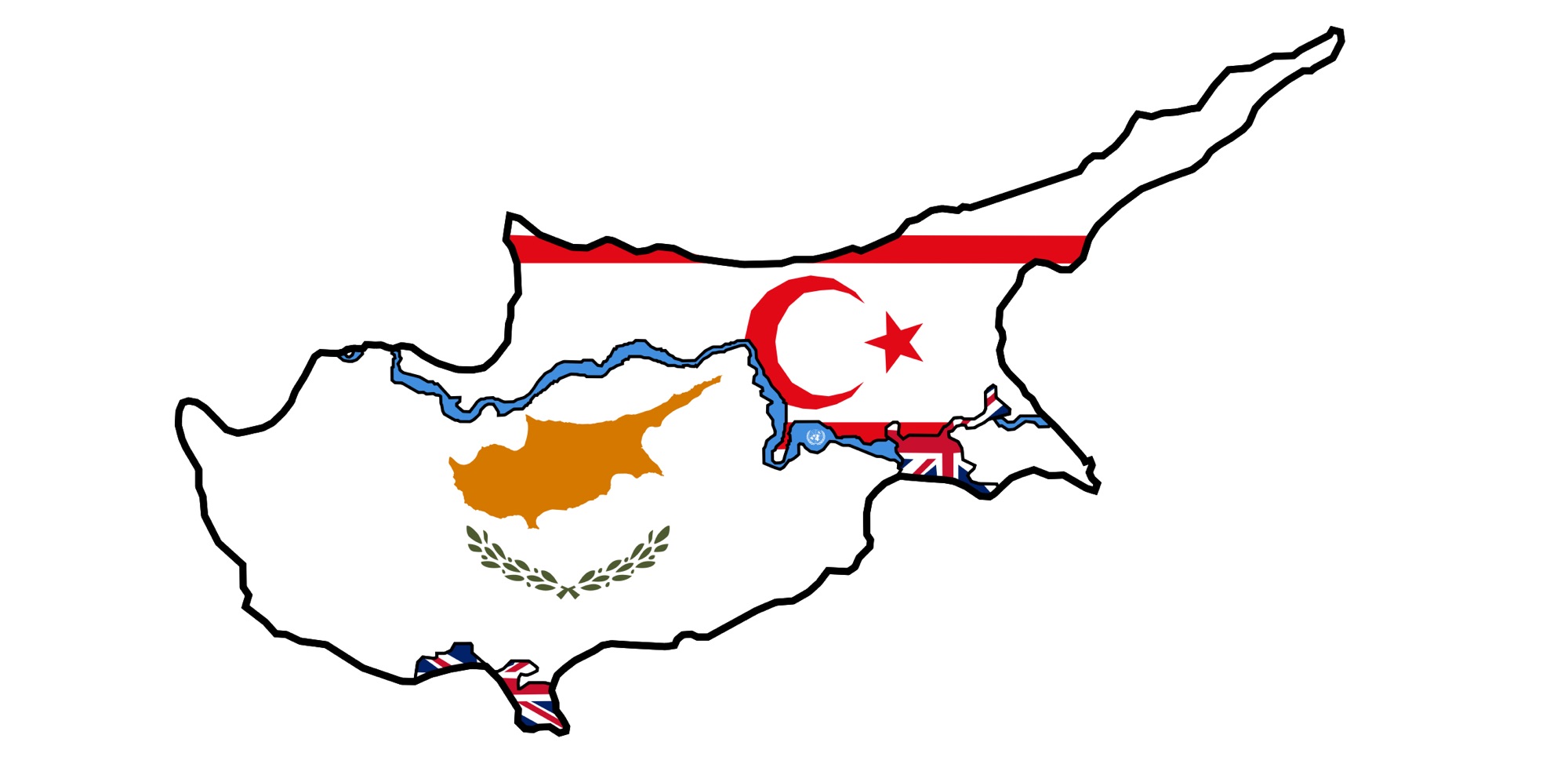
“Flag map of Cyprus” by DJ Mapping is licensed under CC BY 4.0
Northern Cypriot Politics
The government of The Republic of Northern Cyprus is organised as a Unitary Semi Presidential Republic.
In this case the Executive Branch or president is independent of the legislative body; and the Prime Minister or “head of government” is appointed by the president and is accountable to the legislative body or parliament.
PHOTO NOT YET AVAILABLE
President: Tufan Erhürman
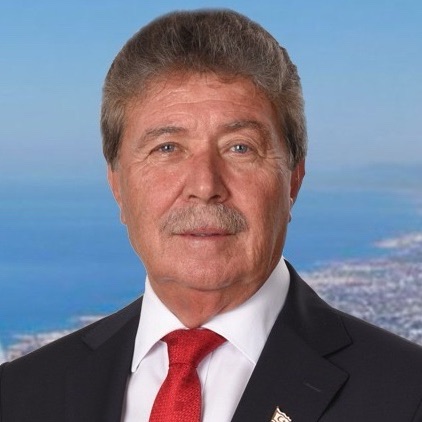
Prime Minister: Ünal Üstel
Cabinet of Ministers
- Prime Minister: Ünal Üstel
- Deputy Prime Minister: Fikri Ataoğlu
- Minister of Public Works & Transport: Erhan Arıklı
- Minister of National Education: Nazım Çavuşoğlu
- Minister of Finance: Özdemir Berova
- Minister of Interior: Dursun Oğuz
- Minister of Foreign Affairs: Tahsin Ertuğruloğlu
- Minister of Health: Hakan Dinçyürek
- Min. of Agriculture & Natural Resources: Hüseyin Çavuş
- Min of Labor & Social Security: Sadık Gardiyanoğlu
Legislature
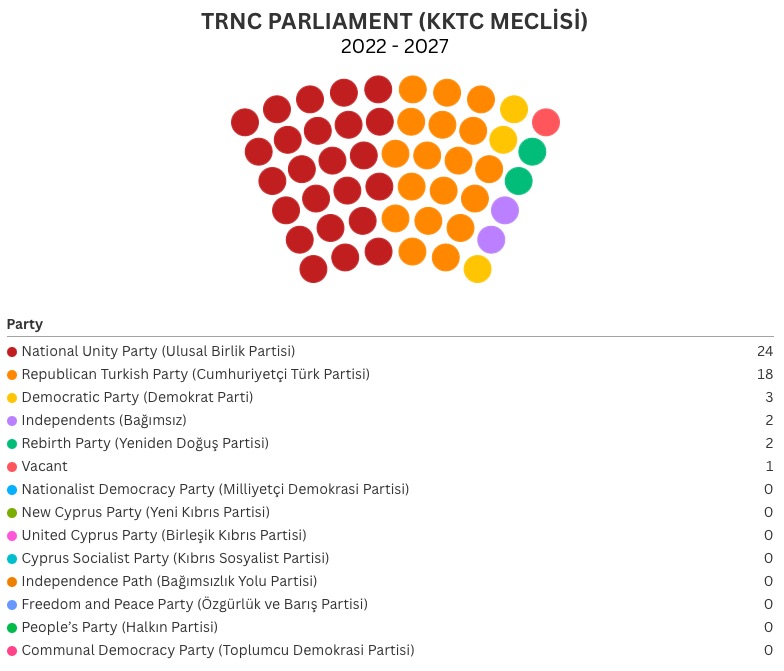
The Parliament of Northern Cyprus consists of 50 delegates and is led by Ziya Öztürkler. Elections are held every five years and there is population proportional representation of each of the six districts (Lefkoşa, Lefke, Güzelyurt, Girne, Gazimağusa,and İskele).
Judiciary
The structure of the Judiciary of The Republic of Northern Cyprus has three branches organised under the legal authority of the Supreme Court.
The Supreme Court is comprised of eight justices with the president Bertan Özerdağ and seven other “judges of the Supreme Court”.
Southern Cypriot Politics
The government of The Republic of Cyprus is organised as a Unitary Presidential Republic.
The Executive Branch consisting of a president and vice president is independent of the legislative body. The office of president is quite influential as evidenced by the fact that the president currently has the power to appoint a cabinet of ministers, deputy ministers, state officials, and Supreme Court Judges. The president also has the power to veto law and policy decisions. The office of vice president, reserved by law for a Turkish Cypriot representative, has been vacant since 1973. This offices roles are therefore “temporarily” bypassed or redistributed to other agents of the government.
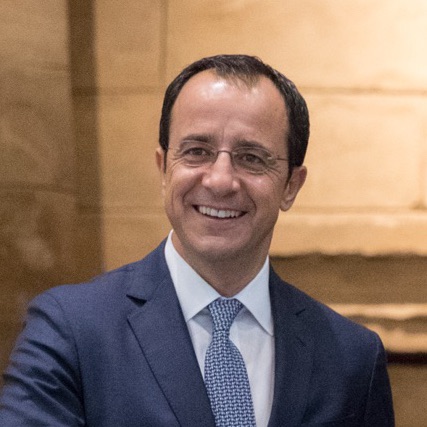
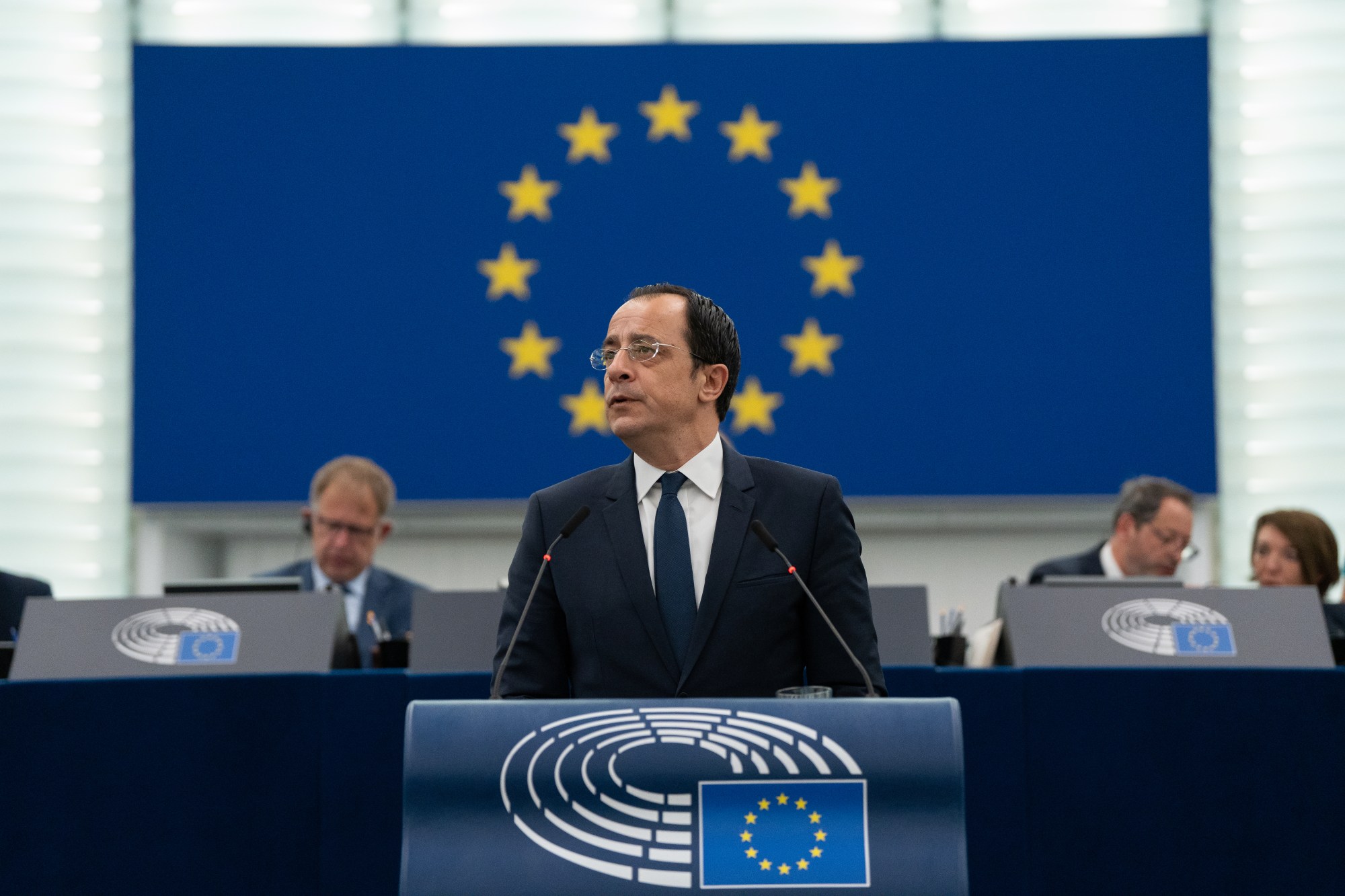
President: Nikos Christodoulides

.
No current vice president
Cabinet of Ministers
- President of the Republic: Nikos Christoulides
- Minister of Foreign Affairs: Constantinos Kombos
- Minister of Finance: Makis Keravnos
- Minister of Interior: Constantinos Ionnou
- Minister of Defence: Vasilis Palmas
- Min. of Education, Sport, &Youth: Athena Michaelidou
- Min. of Transport,Communications,& Works: Alexis Vafeades
- Min. of Energy, Commerce,& Industry:Giorgos Papanastasiou
- Min. of Ag., Rural Dev., & Environment: Maria Panayiotou
- Min. of Labor and Social Insurance: Yiannis Panayiotou
- Min. of Justice and Public Order: Marios Hartsiotis
- Minister of Health: Michael Damianos
- Deputy Minister to the President: Irene Piki
- Deputy Minister of Shipping: Mariana Hadjimanolis
- Deputy Minister of Tourism: Kostas Koumis
- Deputy Minister of Research, Innovation,& Digital Policy: Nicodemous Damianou
- Deputy Minister of Social Welfare: Marilena Evangelou
- Deputy Minister of Culture: Vasiliki Kassianidou
- Deputy Minister of European Affairs: Marilena Raouna
- Deputy Minister of Migration and Internal Protection: Nicholas A. Ioannides
Legislature
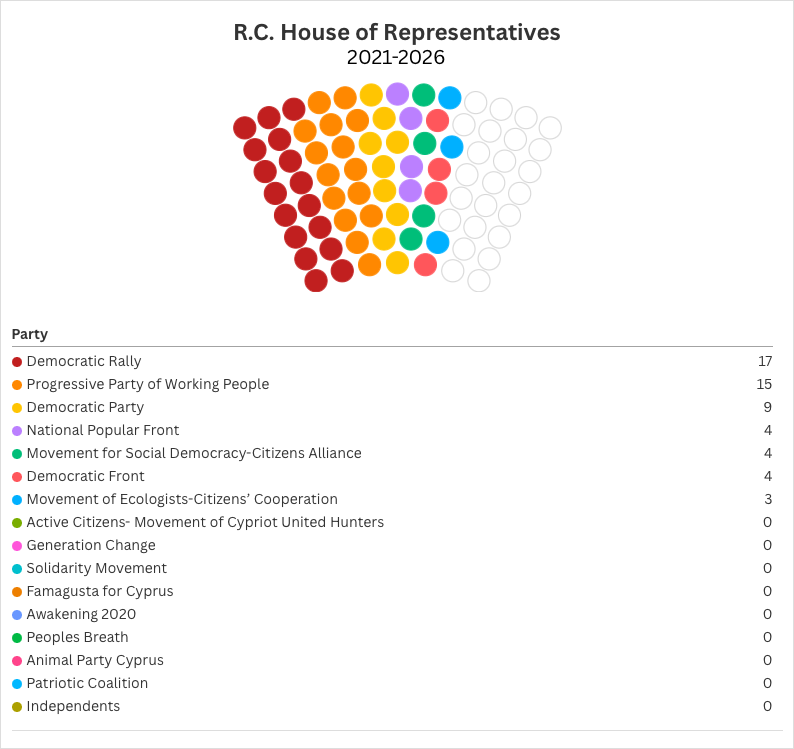
The House of Representatives consists of 80 delegates with 24 seats reserved for Turkish Cypriot representatives. These 24 seats are currently vacant resulting in the actual number of representatives being 56. The leader of the house is Annita Demetriou. Elections are held every five years and there is proportional representation within six electoral districts.“ Today, twenty-one out of the fifty-six Greek Cypriot seats are allocated to the district of Nicosia, twelve to Limassol, eleven to Famagusta, five to Larnaca, four to Paphos and three to Kyrenia.”
Judiciary
The structure of the judiciary of The Republic of Cyprus comprises of seven courts with direct recourse to a court of appeals with the highest national legal authority being the Supreme Court or Constitutional Court. It is also important to note that after joining with the European Union The Republic of Cyprus recognized the supremacy of the European Union law over that of their constitutional and national law.
- Katarina Stamatiou, President
- Yiasemis N. Yiasemis, Judge
- Charis Malachtos, Judge
- Lena Demetriadou-Andreou, Judge
- Ioannis Ioannides, Judge
- Elena Efrem, Judge
- Angelos David, Judge
Key Players

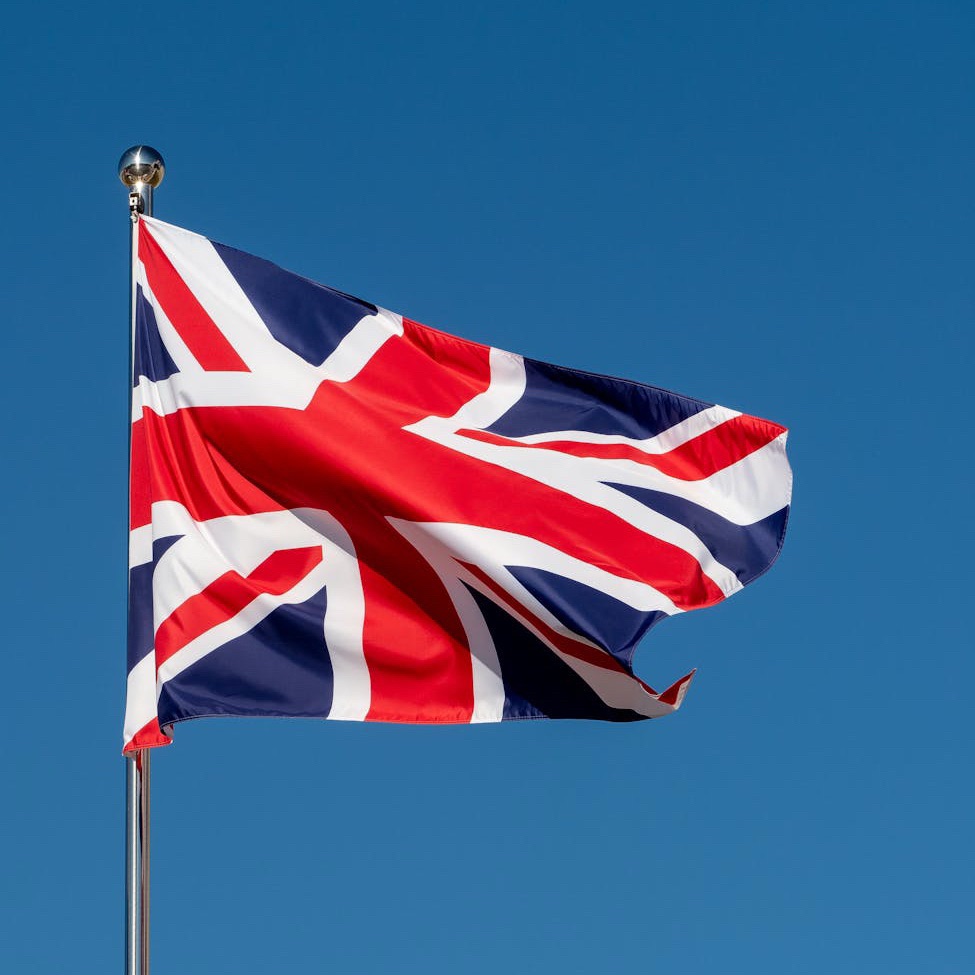
The United Nations Peacekeeping Forces (UNFICYP)
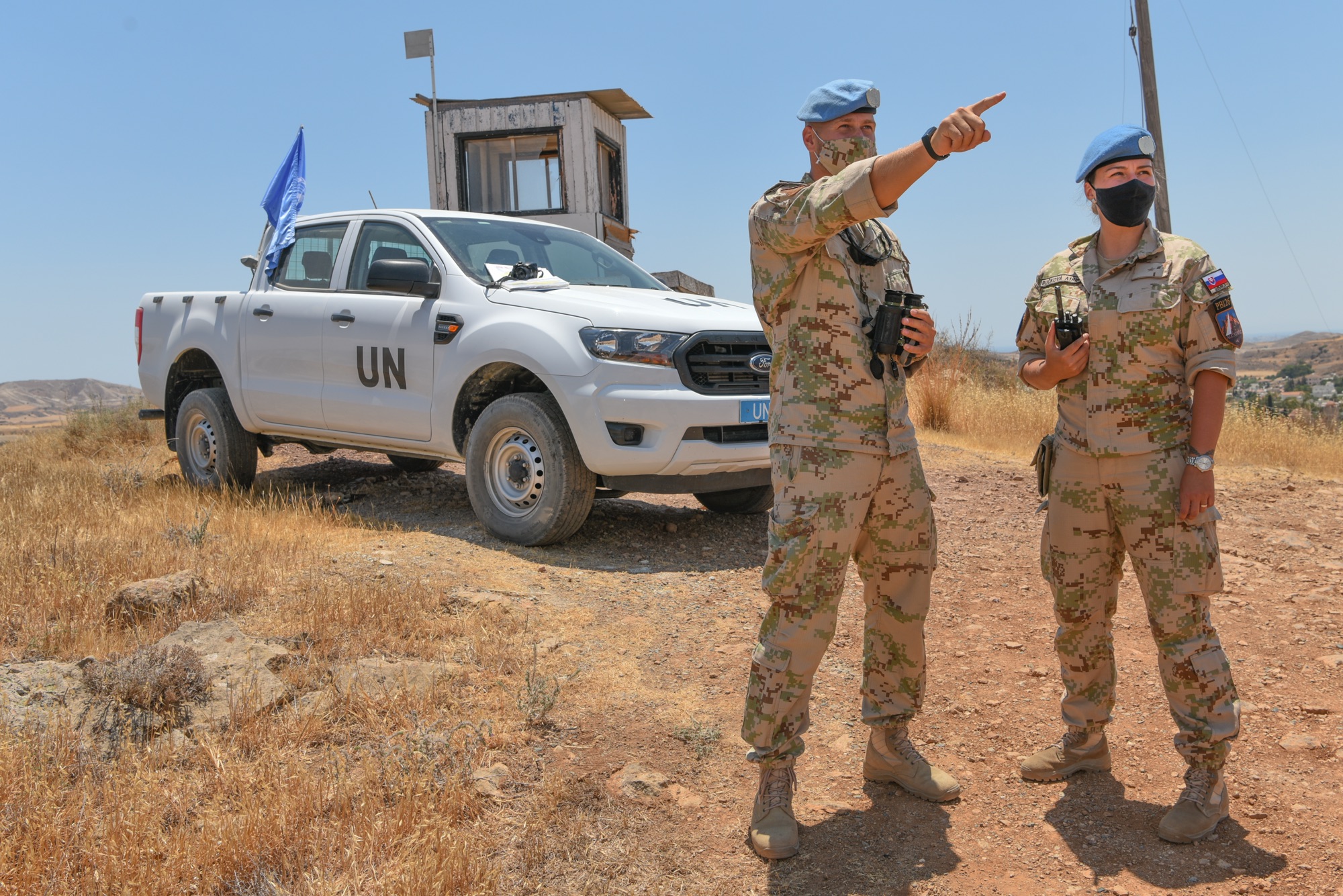
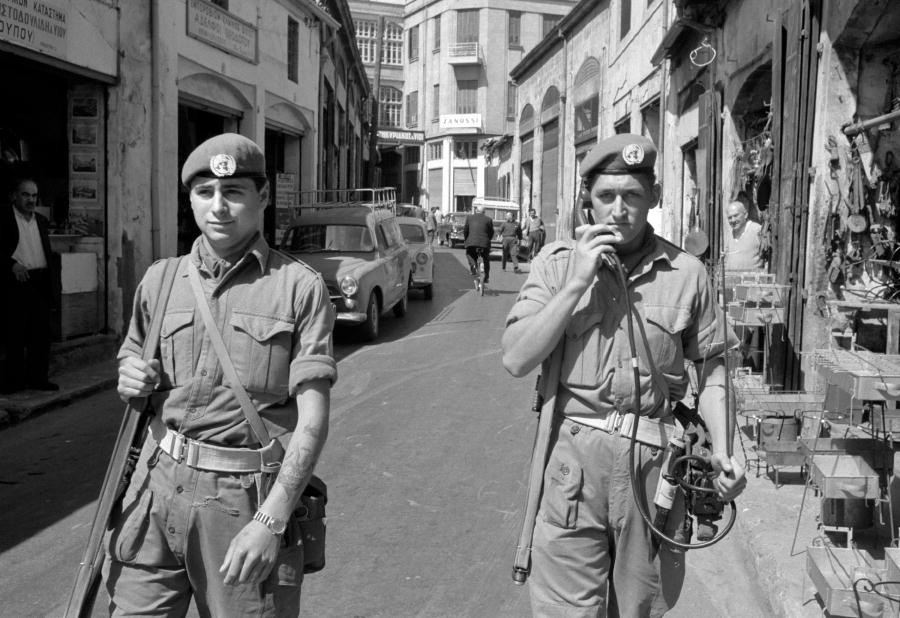
The formal presence of U.N. Peace Keeping Forces began in March of 1964 in order to assist the newly formed Republic of Cyprus in quelling growing interracial violence with the outlook of preventing a potentially disastrous international escalation. Since that day the United Nations Peace Keepers in Cyprus have maintained a contingent on the island making it the longest peace keeping mission of the U.N. Their peace keeping forces currently occupy and are granted administrative authority in the buffer zone and their various bases around the island. The total U.N. Peace Keepers in Cyprus in 2024 was 809. Though not a large contingent on the island they have many responsibilities of which the most important is maintaining the integrity of the de-militarised zone now acting as both buffer zone and de facto border between the north and south. The buffer zone is 180 km long and ranges in width from meters to several kilometres with a total area of approximately 346 square kilometres. The peace keepers presence is felt everywhere and many credit them with the continued peaceful coexistence of the Greek South and Turkish North.
United Kingdom Sovereign Bases Areas (Akrotiri and Dhekelia)
As part of the 1960 London and Zürich Agreements Britain retained the rights to maintain two military bases and control of their surrounding areas in southern and eastern Cyprus. These bases and their surrounding areas are administrated by a military authority commissioned for the task by the government of the UK. While the UK has historically maintained a good working relationship with the government of Cyprus and has cooperated with it in resolving issues as they arise the British presence in Cyprus remains somewhat complex. Some Cypriots see it as maintaining colonialism since Cyprus at the time of the agreements was not in a position to refuse the conditions offered by the UK for their independence. This is further exacerbated by the fact that the agreements have no expiration date and are protected under international law. Other objectors to the British presence on the Island are those that see it, as a tool of a western political agendas in the region. This is not unfounded as the strategic location of these bases have proven to be advantageous not just for the British military but also for their allies, most notably the US. Therefore, while the SBAs may not play a pivotal role in local Cypriot politics they are influential and they certainly affect geo political relations in the eastern mediterranean.
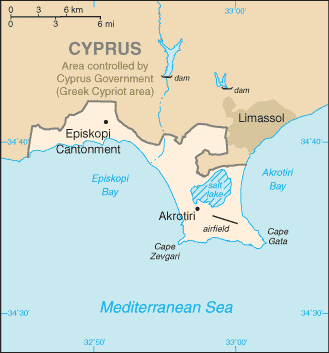
Akrotiri S.B.A.
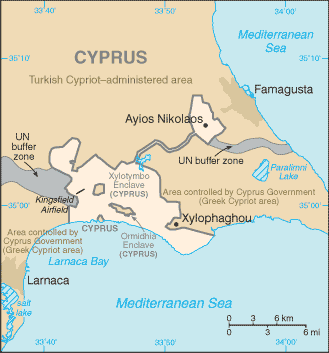
Dhekelia S.B.A.
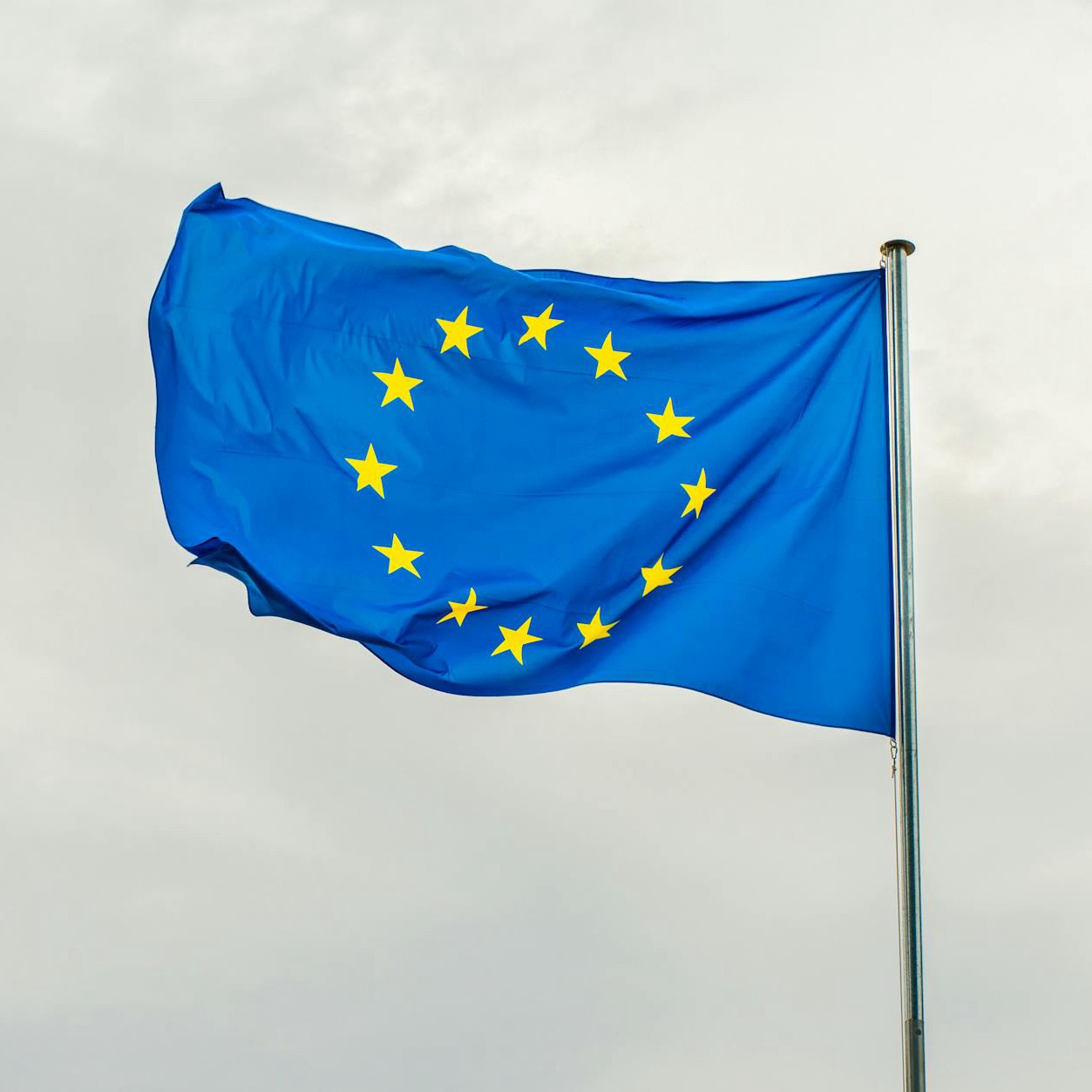
The European Union
The Republic of Cyprus joining the European Union has been wide sweeping effecting everything from what currency is used to legal and political approaches taken. Largely welcomed as positive, even at times providing much needed injections of capital, Cyprus’ membership in the European Union is believe to have a stabilising effect in a largely unstable and divided island. For the south their presence in the EU gives them a greater sense of security in the face of possible Turkish aggression.
The Republic of Cyprus’ membership in the EU also influences Turkish Cypriots in the North in various ways. Turkish Cypriots ,who apply for a passport from The Republic of Cyprus, also by default are given the right to travel freely in the EU. Some Turkish Cypriots, also concerned about aggression from the south may also take comfort in the regulatory effect that the EU would have on the use of military force to resolve the deadlock.
Turkey and its Armed Forces
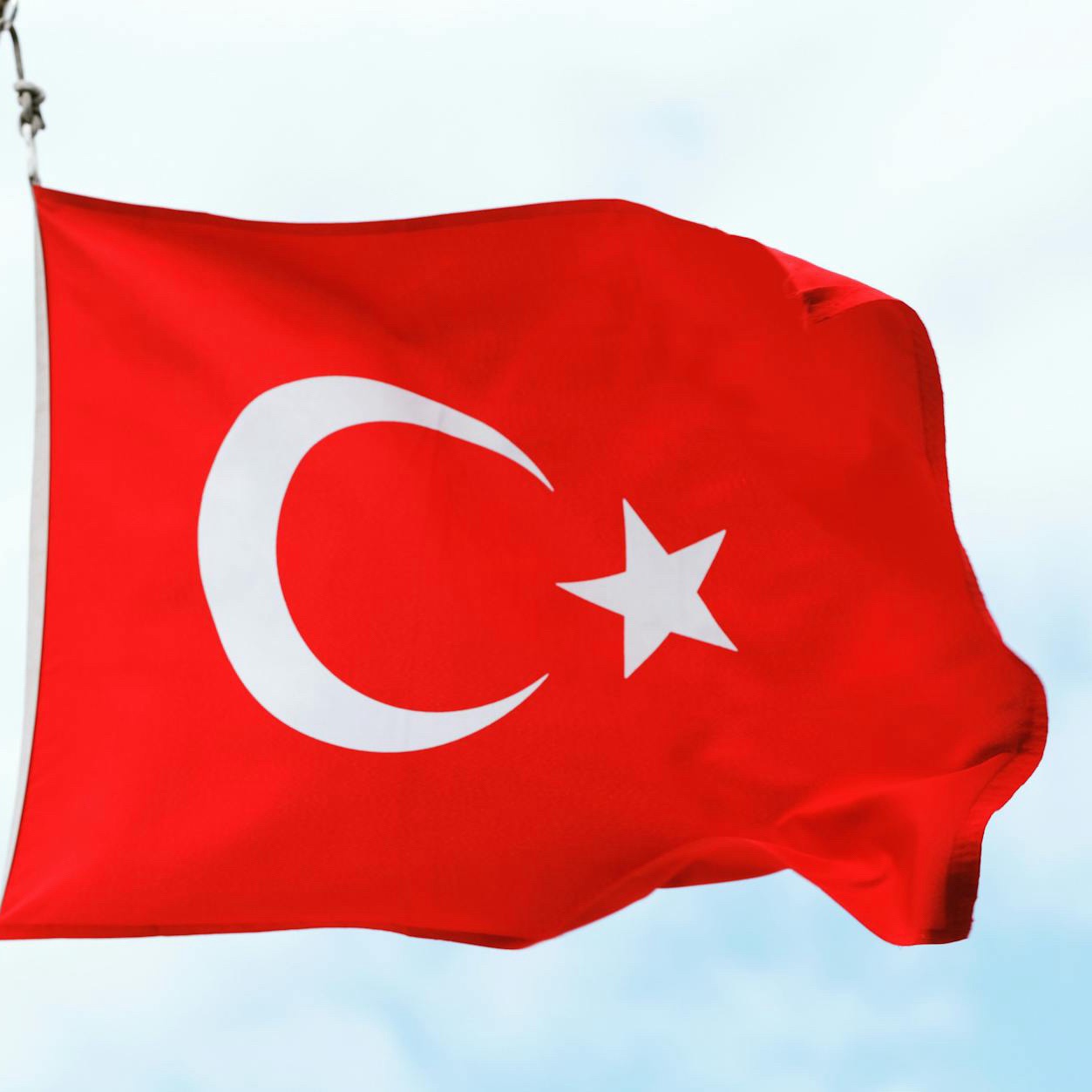
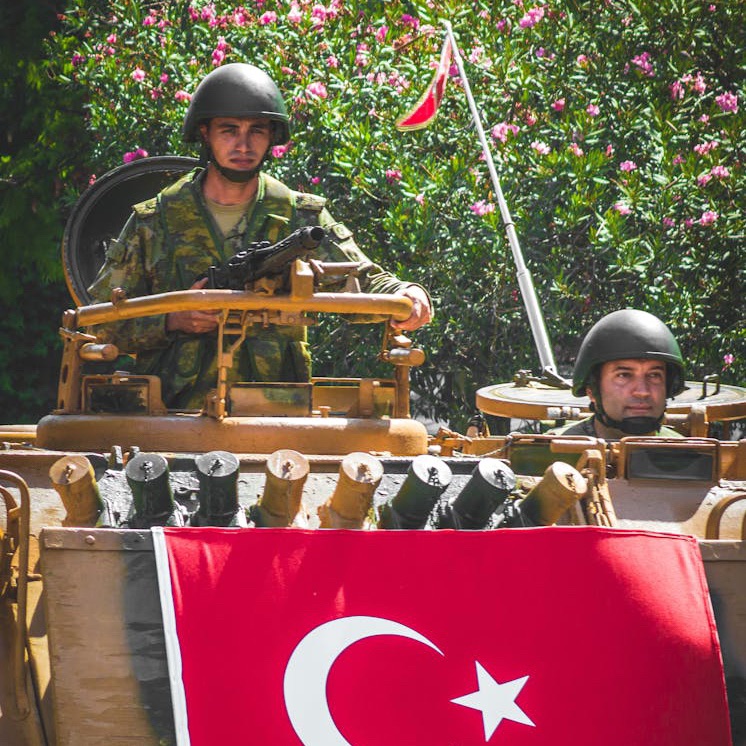
Perhaps the most polarising political presence on the island of Cyprus is that of the Turkish armed forces. Present since August of 1960 turkish troops have had a continuous presence on the island to one degree or another. Their most notable influence came at the time of their “intervention” or “invasion” in 1974 when they established a beachhead and then later took control of the North part of the Island partitioning it from the south. Turkish armed forces comprise a majority of the armed forces on the island. The South regard their presence as an occupation. The North Cypriot left views them as saviours become occupiers. The current government of North Cyprus and the Turkish Cypriot Right regard them as saviours and guarantors of Turkish Cypriot rights deterring any military intervention from the south. Regardless of one’s perspective on the role of Turkish armed forces in Cyprus their presence speaks volumes about the complex relationship that The Republic of Turkiye has with the TRNC.
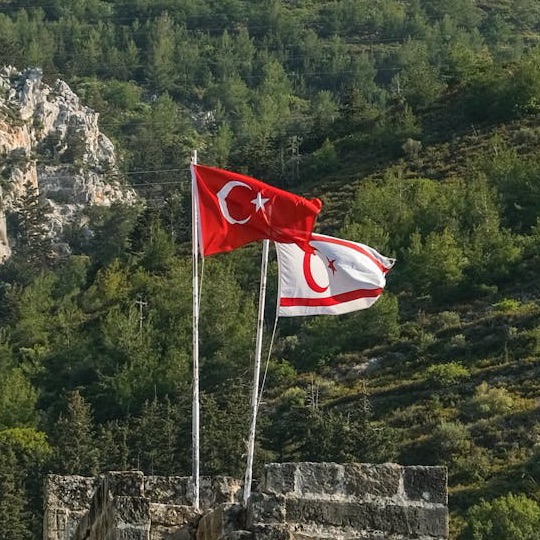
Turkiye is the only country to legally recognise the government of the Republic of Northern Cyprus. As a result all other countries have levied trade embargoes against the TRNC, This makes Turkiye the sole trade partner of the TRNC. All imports and exports, shipping, post, internet, and even flights are routed through Turkiye. Turkiye also supplies Northern Cyprus with fresh water without which Northern Cyprus would not have enough to meet the needs of its population. Northern Cyprus also uses the Turkish Lira as its currency. Needless to say this support from Turkiye means that they are deeply involved in Northern Cypriot daily life and have significant influence in local politics too.
 Pray4Cyprus

Join us and share your prayers …